Pakistan’s crypto plans have hit a religious and regulatory speed bump.
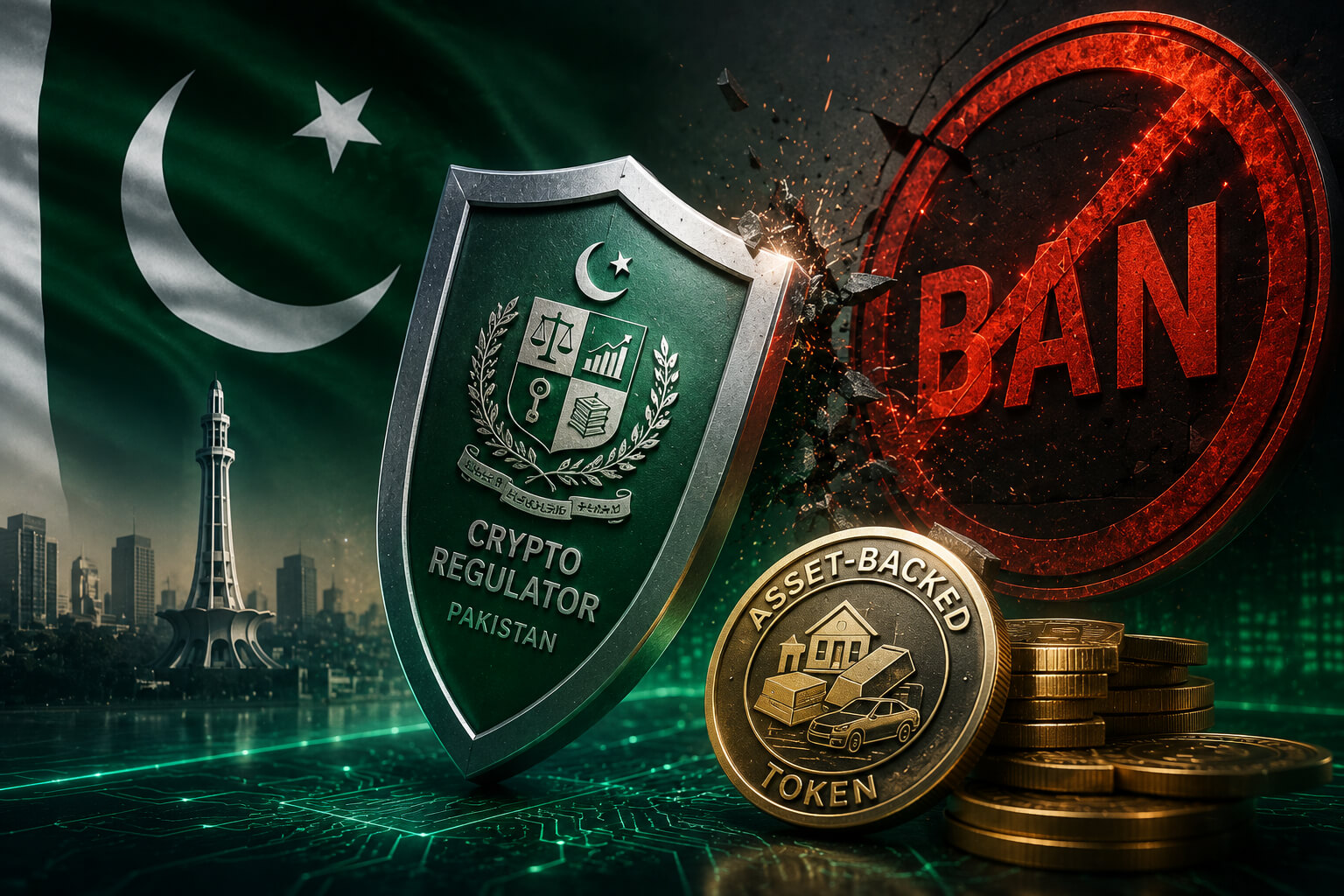
The country’s virtual assets regulator is now trying to prevent all digital assets from being thrown into the same basket after a major Islamic seminary ruling questioned the permissibility of cryptocurrency transactions under Shariah law.
At the center of the issue is one big distinction: speculative crypto versus asset-backed digital tokens.
That difference may decide whether Pakistan slows down its crypto ambitions or builds one of the more serious Shariah-compliant digital finance frameworks in the world.
Pakistan Crypto Regulator Wants a Clearer Religious Position
Bilal bin Saqib, chairman of the Pakistan Virtual Assets Regulatory Authority, has reportedly asked Jamia Darul Uloom Karachi to clarify its position on digital assets.
The move came after the seminary issued a fatwa saying cryptocurrency-based purchases are not permissible under Islamic law. The ruling created uncertainty around Pakistan’s growing push to regulate virtual assets and bring crypto activity into a formal legal structure.
For Pakistan, this is not a small policy debate.
The country has a large retail crypto market, a young population, and a government that has recently shown more interest in digital assets. A blanket religious objection could make banks, investors, and licensed firms far more cautious.
The Problem Is Not Just Crypto. It Is What Kind of Crypto.
This is where the debate gets more interesting.
The regulator is not simply asking scholars to approve cryptocurrency as a whole. Instead, PVARA appears to be pushing for categories.
A meme coin with no underlying asset is one thing. A gold-backed token, a fully reserved stablecoin, or a blockchain-based sukuk may be another.
That is the argument.
Saqib has reportedly said that blockchain itself should be viewed as a record-keeping and verification system, not automatically as a financial asset. In other words, the technology may be neutral, while the actual token structure determines whether it can fit Islamic finance principles.
That distinction matters.
Islamic finance already deals with ownership, asset backing, income-generating structures, and enforceable claims. So the question is not only whether something is “crypto.” The deeper question is whether the digital token represents real value, real ownership, and lawful economic activity.
Asset-Backed Tokens Could Survive the Crackdown
PVARA is reportedly working with scholars to define at least two safer categories of digital assets.
The most likely candidates are asset-backed tokens and fully reserved stablecoins.
Gold-backed tokens could be easier to defend because they are tied to a tangible asset. Tokenized sukuk may also have a stronger case if the token represents ownership in a real income-generating asset. Stablecoins, meanwhile, could be considered differently if they are fully backed by reserves and redeemable.
But there is still resistance.
Some scholars remain concerned that digital assets are too speculative, too volatile, or too detached from recognized wealth to be treated as lawful under Shariah. Others appear open to more study, especially when the token is backed by something real.
So Pakistan is not looking at a simple yes-or-no answer. It is looking at a messy middle.
And honestly, that may be the only practical path.
A Full Ban Could Slow Pakistan’s Crypto Regulation Plans
A total ban on crypto-related activity would not just affect traders. It could also weaken Pakistan’s attempt to build a regulated digital asset sector.
Banks may hesitate. Licensed crypto firms may wait. Stablecoin projects and real-world asset tokenization could lose momentum before they even properly launch.
JS Global Capital’s head of research, Waqas Ghani, reportedly warned that the fatwa could slow broader bank-led crypto adoption, even if retail trading has not yet been affected.
That is the strange part.
Crypto activity often continues even when formal institutions step back. People still trade. Informal markets survive. But regulated adoption becomes harder.
For Pakistan, that would be a problem because the whole point of creating a virtual assets authority is to move digital asset activity out of the grey zone.
Pakistan Wants a Shariah-Compliant Crypto Framework
The regulator’s position seems careful.
It is not dismissing religious concerns. It is trying to work through them.
That approach makes sense in Pakistan, where Islamic finance standards carry real weight across banking, investment, and public trust. If crypto regulation moves too fast without religious approval, adoption could face resistance. If scholars reject every digital asset without distinction, the country may lose a chance to shape a serious Islamic digital finance model.
The possible compromise is classification.
Speculative tokens may remain problematic. Asset-backed tokens, tokenized sukuk, and fully reserved stablecoins could receive a different treatment if scholars agree they represent recognized wealth and lawful ownership.
That would not make Pakistan’s crypto path easy. But it would make it more realistic.
Why This Matters Beyond Pakistan
Pakistan’s debate could influence other Muslim-majority markets watching the same issue.
Crypto regulation is already complicated. Add Shariah compliance, stablecoins, tokenized assets, and public trust, and the challenge becomes even sharper.
If Pakistan finds a credible framework, it could position itself as a leader in Shariah-compliant digital finance. If the debate ends in a broad ban, the country may push innovation away from regulated institutions and back into informal channels.
For now, the regulator is fighting for nuance.
And in crypto policy, nuance is usually the first thing to disappear.